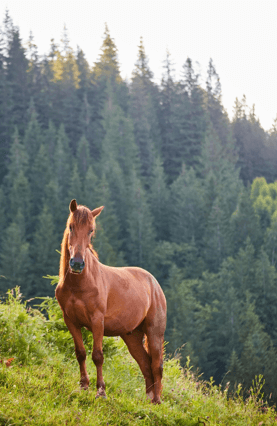

The fact that a horse can freely move and balance and react to the cues is directly related to the state of its joints. In daily training as well as competition, joints are at the center of weight bearing, shock absorption, and change of gait patterns of a horse. When joint health is not at its peak, movement and willingness changes may start to creep in, which may have an effect on performance in the long term.
The Structure of Horse Joints
Horses have complicated joint structures. They consist of cartilage, synovial fluid, ligaments, and other surrounding soft tissues that combine to maintain movement. The cartilage has a smooth movement surface, and the synovial fluid is involved in the lubrication of the joint. These components may change, naturally, with regular working, aging, or environmental factors. These changes may not always present as lameness but can be manifested as stiffness on initiation of exercise, decrease in the stride length, or loss of enthusiasm during work.
Joint Demands in Performance Horses
Repeated stresses on the joints are imposed on performance horses, especially. Cyclical stress on joints is needed in jumping, racing, dressage movements, and long training sessions. The effect of this stress in the long run is that it may affect the comfort of movement of the horse. The riders and trainers might find that a horse is slow to warm up or that there are performance variations between one session and another. Although these signs may be caused by several factors, joint condition is normally regarded as one of the causes.
Nutritional Approaches to Joint Support
One of the topics that horse owners should consider when discussing joint support is nutrition. Diets can be formulated to address energy, protein, vitamin, and mineral requirements, although some owners connect to specific nutritional products. This is commonly referred to as a horse joint supplement, especially among the animals that are in regular work or those that are in later stages in life. The products are usually designed to supplement a balanced diet and not to substitute it, and their intake is normally viewed as a component of a larger management strategy.
Collagen-Based Ingredients in Equine Diets
Other formulations contain collagen-related compounds that have attracted attention due to the fact that collagen is a natural constituent of connective tissues. An equine collagen supplement is occasionally part of the feeding regime with the view of availing nutritional building blocks linked with cartilage and other joint structures.
Management Factors That Influence Joint Health
It is worth noting that nutrition is not the only factor that has an effect on joint health. All the factors that influence the joint response to exercise include the training surfaces, intensity of workload, balance of hooves, and conformation. An example is that uneven footing (or too hard) can cause an increase in impact forces, and inconsistent trimming or shodding can also change joint angle. These factors can be addressed in a careful way and could help to make movement patterns more consistent and comfortable during the working process.
The Relationship between Joint Comfort and Behavior
The joint condition may also lead to a poor mental approach of a horse in regard to performance. Horses with painful or stiff joints are likely to be shy, difficult to move, or slow. This may not be a behavioral problem but could be an indicator of what the horse feels he needs in terms of movement. With time, this may affect the training developments and the performance in competition even when the horse is willing and paying attention.
See also: The Hidden Lifecycle of Termites Inside Residential Properties
Monitoring Joint-Related Changes
Owners usually track the changes in the joints by observing the movement pre- and post-exercise, observing recovery periods and attention to gait symmetry. Informed choices can be assisted with regular veterinary visits and enhanced communication between the riders, trainers, and care providers. In this regard, nutritional issues like horse joint supplements are typically not addressed as separate solutions but are considered in conjunction with workload management and conditioning programs.
Joint Health Considerations for Aging Horses
With the aging of horses, natural wear and adjustment allowed in the joints can be more pronounced. Older horses and horses with extensive competition records can exhibit progressive changes in their flexibility or endurance. Considered approaches to this stage would tend to be routine maintenance, the right amount of exercise, and the right kinds of diets according to the needs. They are the strategies that are expected to help in maintaining the continued involvement of work or leisure activities in a manner that is sensitive to the individual condition of the horse.
Final thoughts
Joint health may affect the movement, response, and performance of a horse in a variety of activities. Although performance depends not on one single factor, joints are still a considerable constituent to the overall picture. Nutrition, proper training, and proper care are all aspects that make a horse comfortable to meet the physical demands. A horse joint supplement including a formula such as OptiWize 10-N-1 is usually viewed as part of a broader strategy of observation, consistency, and informed care and not as a formula with guaranteed results.

 By
By


 By
By