

Floor sofa beds don’t look like much when they’re folded up against the wall. But when your sister calls at 9 pm saying she needs a place to crash, or your kid’s sleepover suddenly involves six children instead of two, you’ll be glad you’ve got one.
The problem is that most people buy the wrong floor sofa bed. They go for the cheapest option or the prettiest fabric, then end up with something that’s uncomfortable to sit on or falls apart after three months of use.
But you don’t have to settle for furniture that barely makes it through the year. Our team at Made Minimal helps Brisbane families find pieces that handle real everyday life. We know what works in small spaces, busy households, and rooms that need to do double duty.
This guide covers everything from comfort and sizing to fabrics that survive spills and filling that won’t flatten out. So let’s find you a floor sofa bed worth keeping around.
Floor Sofa Bed Basics: What You’re Getting
A floor sofa bed sits directly on the ground and unfolds into a sleeping surface without traditional legs or frames. Think of it as a hybrid between a futon and modular floor cushions, built to work as both a sofa and a bed.
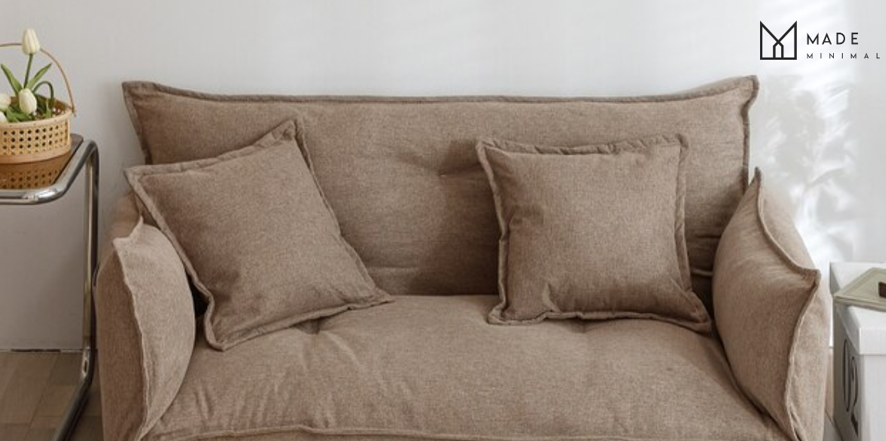
The appeal is simple enough. You get furniture that works as both a sofa and a bed without needing space for two separate pieces.
Learn the basic mechanics, so you know what you’re getting into.
How Floor Sofa Designs Work
Floor sofas use folding cushion sections that expand flat, which create a mattress-style surface when you need extra sleeping space.
In our experience, most models fold in two or three sections, though some go up to four. When folded, they stack upright to work as a backrest for sitting. When unfolded, they lay flat to create a bed.
Even the mechanics are really easy. You’re just unfolding cushions and laying them flat on the ground. No hidden frames to pull out, no legs to unfold, no complicated locking mechanisms. Plus, setup takes about 30 seconds. Just grab the top section, unfold it forward, and you’ve got a bed ready to go.
Where They Fit Best
Living rooms with casual, laid-back setups work well since floor sofas suit relaxed lounging and movie nights. They’re also great for gaming rooms where you want seating that puts you closer to the screen.
Beyond everyday use, guest rooms benefit from easy storage when not needed, freeing up floor space for other uses. When guests leave, you can fold the whole thing up and tuck it in a cupboard.
Meanwhile, kids’ playrooms and teen bedrooms handle the low profile well since there’s less distance to fall if someone tumbles off while roughhousing or reading (we’ve all been there with kids who treat furniture like jungle gyms).
Now that you know what floor sofa beds are and where they fit, the next step is figuring out whether they’ll be comfortable enough for regular use.
Comfort for Sitting and Sleeping
Floor sofa beds need proper cushion thickness and foam density to feel comfortable without a raised frame underneath. Believe it or not, comfort works differently when you’re sitting or sleeping directly on the floor.
Here are the main comfort factors to consider:
- Sitting Comfort: Sitting feels different without back support from a frame, so look for thicker cushions around 12-15cm. Thinner cushions compress too much under your weight, which means you’re basically sitting on a hard floor after about 10 minutes. The extra thickness gives you enough cushioning to stay comfortable during movie nights or reading sessions without your back aching.
- Sleep Comfort: You need dense foam that won’t compress into hard floors overnight. Soft foam feels nice at first, but bottoms out quickly, which leaves you with pressure points by morning. On the other hand, high-density foam maintains support through the night, giving you a good night’s sleep instead of waking up sore.
- Sleep Position: We’ve seen back sleepers generally find these beds comfortable since the firm surface supports spinal alignment. Side sleepers might need extra cushioning for pressure points at the hips and shoulders.
The right combination of thickness and density makes the difference between a floor sofa bed you’ll use and one that collects dust in the spare room.
Sizing Up Your Space
Once you’ve sorted out the comfort side, the next step is figuring out what size fits your room.
Based on our experience, single floor sofas extend to about 190cm x 90cm, which fits tight spaces like studios or small bedrooms. They work well for one person sleeping or two people sitting side by side during the day.
Double sizes reach around 200cm x 140cm when unfolded, comparable to a standard double bed footprint. These handle two adults sleeping comfortably or provide more lounging space for family movie nights. So they’re ideal if you’ve got the room to spare.
Now, if you want the right fit, you need to measure your room with the sofa fully extended. Don’t just measure the folded dimensions. Walk around the space and think about clearance on all sides for comfortable movement.
The right size leaves enough space to move around without tripping over corners or bumping into walls every time you walk through.
Fabric Picks That Handle Daily Use
Down the track, fabric quality affects how your floor sofa holds up as much as anything else. You’re sitting on it, sleeping on it, folding it, unfolding it, and probably eating snacks nearby. That’s a lot of wear for any material.
Follow these fabric options to find what lasts:
See also: How Blockchain Improves Supply Chain Technology
Materials That Last
Some fabrics handle the folding, sitting, and sleeping routine better than others, especially with regular use. For starters, corduroyhandles daily sitting and sleeping well. The ribbed texture hides minor wear and resists flattening over time, which means your sofa maintains its look even after months of use.
Canvas or heavy cotton blends handle frequent folding and unfolding without fraying at seams or corners. These materials take repeated stress, so you’re not dealing with loose threads or torn fabric after a few weeks. They’re practical choices for households where the floor sofa gets used every day.
Another option worth considering is microfiber. It repels light moisture and cleans easily, good for households with kids who eat snacks on the sofa. Spills sit on the surface long enough for you to grab a cloth instead of soaking straight through to the foam underneath.
Spill-Proof Options for Real Life
Now that you know which materials last, here’s how to protect against the inevitable coffee spills and food accidents.
- Stain-Resistant Treatments: Polyester blends with stain-resistant treatment let you wipe spills before they soak into the foam underneath. The treatment creates a barrier that buys you time to clean up, making everyday life a bit easier when accidents happen.
- Washable Covers: If you want fewer worries about stains, removable, washable covers save you from permanent marks. Just zip off and machine wash when needed.
- Colour Choices: Light-coloured fabric shows every mark, which means you’re constantly cleaning or stressing about keeping it perfect. But darker colours like charcoal or navy hide stains better than light neutrals, especially with everyday family use. If you’ve got kids or pets, darker shades are a safe bet.
The right fabric and colour combination means spending less time cleaning and more time actually using your floor sofa bed.
Filling and Support: The Inside Story
Ever wondered why some floor sofas feel like clouds while others feel like sleeping on cardboard? It’s because the filling determines how much support you get.

High-density foam provides firm support that won’t bottom out when you’re sitting or sleeping directly on floors. This density level keeps the cushions from compressing too much under your weight, so you’re not feeling the hard floor beneath after an hour of sitting or by the middle of the night.
You can also find memory foam as an option. s. It moulds to your body, which sounds great, but on a floor sofa bed, it often lacks the support you need for proper back alignment.
Our tests showed that layered foam works best for floor sofas. It combines firm base layers with softer top layers, which give you support and cushioning for all-night comfort. The firm bottom prevents bottoming out while the soft top provides enough cushioning for pressure points.
Moving It Around: Weight and Portability
Floor sofas offer better convenience compared to traditional furniture, but weight and design still affect how practical they are. Lighter models shift easily for cleaning or rearranging, while heavier ones stay put but become a hassle when you need to move them.
Count on these two factors when checking portability:
1. How Easy They Are to Shift
Weight and design determine whether you can move your floor sofa solo or need help every time.
Most floor sofas weigh between 15 and 25kg, light enough for one person to drag or carry from room to room. That’s significantly lighter than a standard sofa bed, which makes rearranging furniture or deep cleaning under the sofa much easier.
Beyond that, modular designs split into separate cushions, making it easier to move through narrow hallways or tight doorways. Instead of wrestling a single heavy piece around corners, you carry individual sections that fit through any space.
Worth Noting: Handles or straps on some models help with lifting, though many budget options skip this feature entirely. If you’re moving the sofa frequently, handles cut the effort in half and reduce the chance of dropping a section on your foot.
2. Folding and Storage Options
Folded floor sofas typically measure 90cm x 90cm x 40cm, fitting into cupboards or under beds when not needed. This compact size works well for guest rooms where you want the space back after visitors leave, or for small apartments where every bit of storage counts.
Some models include storage bags or straps to keep folded sections together, preventing cushions from separating in storage. Without these, you’re hunting for loose cushions or dealing with sections that won’t stay stacked properly.
Finding Your Perfect Sofa Bed
Floor sofa beds work when they match how you actually live. The right sofa bed handles your space, survives daily use, and doesn’t fall apart after a few months.
You’ve got the facts now. Comfort depends on cushion thickness and foam density. The size needs to fit your room with space to move around. Fabric choice determines how well it holds up to spills and wear.
If you’re ready to find one that suits your home, check out the floor sofa bed options at Made Minimal. We stock pieces built for everyday life, not just showroom displays.


 By
By




 By
By