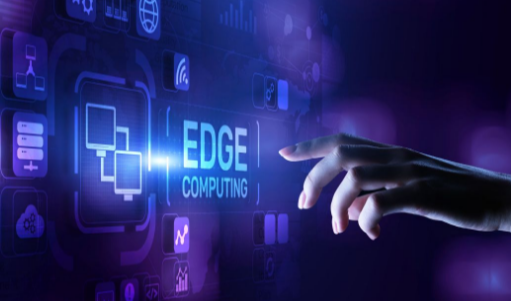

Edge technology plays a pivotal role in enhancing real-time data processing. By facilitating localized computation, it minimizes latency and enables swift decision-making. This approach not only ensures timely insights but also bolsters data accuracy. As industries increasingly adopt edge solutions, understanding the fundamental benefits and applications becomes essential. The implications of these advancements could redefine operational strategies in numerous sectors, prompting a closer examination of future trends and their potential impact.
The Fundamentals of Edge Technology
Although the concept of edge technology may seem recent, its foundational principles are rooted in the necessity for efficient data processing and reduced latency.
Edge devices facilitate localized computation, ensuring that data is processed closer to its source. This minimizes data latency, enhancing responsiveness in various applications.
Benefits of Real-Time Data Processing
As organizations increasingly rely on data-driven decision-making, the benefits of real-time data processing become paramount.
This approach enhances data accuracy, enabling timely responses to evolving situations. By facilitating immediate insights, organizations can optimize operations, improve customer experiences, and mitigate risks.
Ultimately, real-time data processing empowers businesses to make informed decisions, fostering agility and competitiveness in a rapidly changing landscape.
Read Also: How Edge Technology Improves Speed and Performance
Industry Applications of Edge Computing
Real-time data processing serves as a foundation for the effective implementation of edge computing across various industries.
In smart cities, edge technology enhances traffic management and public safety through instantaneous data analysis.
Similarly, in industrial automation, it streamlines operations by enabling real-time monitoring and predictive maintenance.
These applications underscore edge computing’s capacity to optimize efficiency and responsiveness in diverse environments.
Future Trends in Edge Technology and Real-Time Data
How will the integration of artificial intelligence and machine learning influence the future of edge technology and real-time data processing?
The convergence will enhance edge analytics, allowing for quicker insights and more autonomous decision-making.
Additionally, as concerns over data privacy intensify, edge computing’s localized processing can mitigate risks, ensuring that sensitive information remains secure while still enabling rapid data-driven responses.
Conclusion
In the ever-evolving landscape of technology, edge computing emerges as a beacon of efficiency, illuminating the path to real-time data processing. By drawing insights from the very heart of data generation, organizations can dance gracefully with the rhythm of change, enhancing decision-making and operational prowess. As industries embrace this transformative force, the fusion of speed and accuracy heralds a new era of innovation, where the pulse of real-time information fuels competitive advantage and shapes the future of business.

 By
By
 By
By

 By
By