
Efficient floor space management is the silent engine of modern industrial success. As production facilities face increasing pressure to scale output without expanding their physical footprint, the focus has shifted from the ground up—literally. Traditional forklift based logistics often create bottlenecks, safety hazards, and wasted “dead zones” in a facility. Transitioning to overhead, heavy-duty systems enables a more fluid, multi dimensional approach to manufacturing that maximizes every square inch of available volume.
The Engineering Behind Precision Rail Systems
At the heart of a high-performance overhead setup is the rail itself. Unlike standard structural beams, which are often prone to uneven wear and peening, specialized patented tracks are engineered for longevity. These tracks are typically fabricated from high-carbon manganese steel, providing a hardened riding surface that remains straight and true even under extreme cycles.
The structural integrity of these systems is provided by a three-part composite design: a heavy-duty top flange, a web plate, and a hardened tee section. When these components are fused using automated, continuous welding processes, the result is a rail that offers a much higher strength-to-weight ratio than conventional steel. This precision ensures that trolleys glide with minimal rolling resistance, reducing energy consumption and mechanical strain on the entire assembly.
See also: Choosing a Floor Sofa Bed for Everyday Use
Mastering Complex Facility Layouts
One of the most significant advantages of modern overhead infrastructure is its modularity. Industrial spaces are rarely simple rectangles; they are filled with stationary machinery, support columns, and varied workstations. Advanced rail systems utilize a network of switches, curves, and interlocks that allow a load to transition between different areas without ever being lowered or re-rigged.
Glide switches and turntables act as the “air traffic control” of the factory ceiling. They enable a single carrier to seamlessly move from a main trunk line into a specific assembly bay or paint booth. For facilities handling massive components, such as those in the
aerospace or heavy machinery sectors, the ability to maintain a continuous flow from raw material intake to final shipping is a game-changer for lead times.
Integrating High-Capacity Hoist Monorail Systems
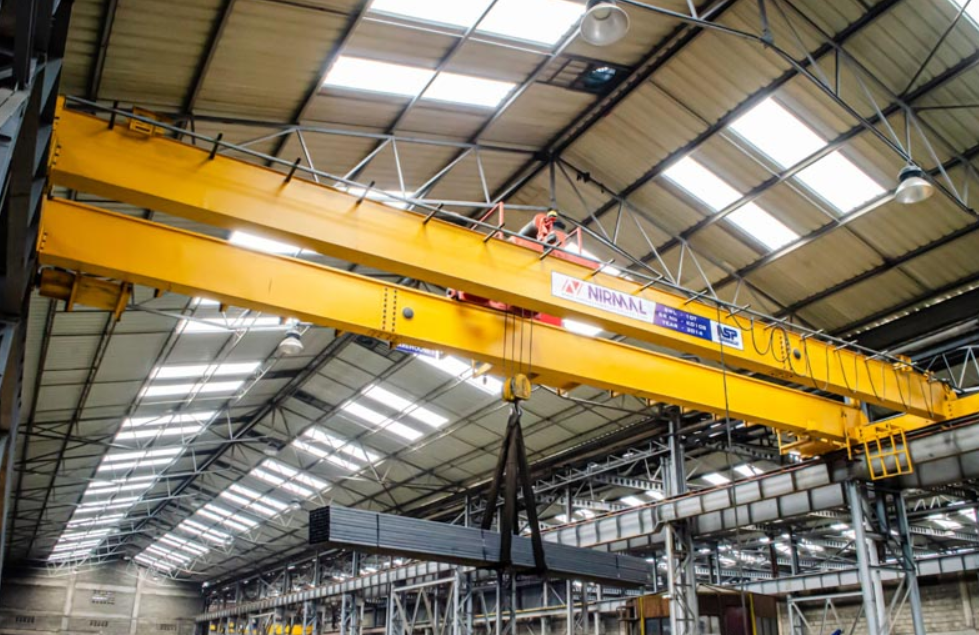
When dealing with loads ranging from 5 to 20 tons, the demands on the hardware intensify. Incorporating hoist monorail systems into the workflow provides the necessary vertical lift and horizontal transport required for heavy-duty industrial tasks. These systems are designed to handle the dynamic stresses of sudden lifting and stopping, using articulating trolleys to evenly distribute the weight across the rail flanges.
Because these systems are underhung, they can be suspended directly from the building’s existing roof structure or a dedicated freestanding framework. This flexibility allows engineers to design paths that snake through tight corridors or clear high-profile equipment that would otherwise block a floor-based vehicle. By moving the heaviest tasks overhead, the floor remains clear for personnel and smaller, more agile assembly processes.
Enhancing Safety and Precision Control
Safety is a natural byproduct of a well-implemented overhead strategy. By removing large, heavy-moving vehicles like forklifts from the warehouse floor, the risk of pedestrian-vehicle collisions is significantly reduced. Furthermore, overhead systems provide far greater precision when positioning expensive or sensitive equipment.
Modern drive units offer variable speed control, allowing operators to transition from high speed transport across the facility to “inching” speeds for delicate placement. Many of these systems also feature electrification via shielded conductor bars, providing a constant power source to the hoists without the clutter of dangling cables or “festooning” that can get caught on nearby structures.
Sustainability and Long-Term Durability
Investing in high-grade overhead infrastructure is a commitment to long-term sustainability. Because the rails are made from hardened alloys rather than mild structural steel, the system’s “operating life” can span decades. Maintenance is generally limited to periodic inspections of the trolleys and lubricating the bearings, a far lower overhead than the constant battery charging, tire replacement, and mechanical repairs required by a fleet of mobile lifts.
As global industries move toward more automated, integrated “smart factories,” the ceiling will remain the most valuable real estate in the building. A robust, precision-engineered overhead system provides the backbone for this future, ensuring that as production needs grow, the facility’s capacity can grow right along with them.

 By
By




 By
By