
A sagging roof does not usually appear overnight. It tends to develop after months or years of strain that slowly changes the structure’s shape. What makes it risky is that homeowners often notice the curve or dip only after the problem has already moved past the outer roofing material. In many cases, the warning signs start beneath the surface, where moisture, weakened wood, or excess weight begin to affect the roof’s support system. That is why homeowners looking into roof repair brigham city should treat any change in the roofline as a structural concern rather than a cosmetic flaw.
The key thing to know about roof sagging is that it usually points to a problem beneath the shingles. A roof should stay level and hold its shape across the house. When part of it starts to dip or curve, it often means the materials underneath are no longer supporting the weight properly. That can happen because the decking has taken on moisture, the rafters have weakened, a leak has been left alone too long, or the roof has been strained by repeated severe weather. How serious it is depends on what caused it, how much of the roof is affected, and how long the problem has been there.
Roof Sagging Usually Starts Below the Surface
Most people think about a roof in terms of shingles, because that is the part they can see. But sagging usually starts below them. Shingles can crack, loosen, or wear down over time, but they do not usually cause the roof to dip on their own. The roof keeps its shape because of the wood underneath. When that support starts to weaken, the surface above it begins to change, too.
Moisture is one of the most common reasons that happens. A small leak may not look like much at first. It might leave a light stain in the attic or a small mark on the ceiling and nothing more. But when water keeps reaching the same area, it slowly breaks down the decking and framing. The wood does not have to be drenched all at once. Ongoing dampness can weaken it enough to give way under the weight it normally carries.
That is why a sagging section deserves attention right away. By the time you can see that dip from outside, the damage has usually been there longer than expected. Water may have been moving through the roof system for a while before the shape began to change. At that point, the concern is not only where the leak is coming from, but whether the structure beneath is still solid.
Weight Stress Can Push an Aging Roof Past Its Limit
Not every sag is caused by water alone. In some cases, the roof has simply been under more weight than it can handle. Older structures are especially vulnerable when the framing has already lost some strength with age. Even if a roof was built to carry normal loads, years of wear can reduce how much margin it has left.
This is where seasonal conditions matter. A roof with minor hidden damage may continue to look mostly normal until extra weight exposes the weakness. Heavy buildup, trapped moisture, or repeated cycles of stress can turn a compromised area into a visible dip. Once that happens, the concern is no longer whether the roof has damage. It is how far that damage has spread.
Sagging near the ridge, across a wide span, or in multiple areas usually points to a broader structural issue. A small isolated dip may still require a targeted repair, but widespread unevenness often means the framing itself needs closer evaluation.
Poor Drainage Can Make Structural Problems Worse
Water does not always enter through a dramatic opening. Sometimes it reaches vulnerable areas because drainage has failed over time. When runoff is not moving away properly, moisture can back up under roofing materials, keeping nearby wood exposed longer than it should be.
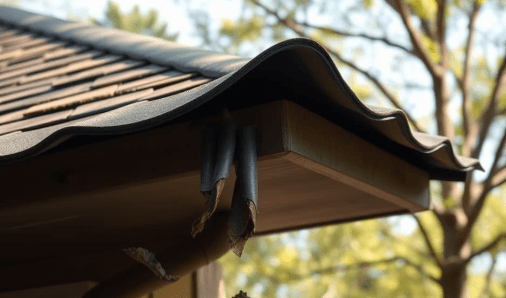
This kind of slow exposure is easy to underestimate. A homeowner may notice only minor exterior wear while the real damage builds out of sight. Fascia boards, roof edges, and nearby decking can all be affected when water repeatedly lingers where it does not belong. Eventually, that hidden deterioration can contribute to a low or uneven section in the roofline.
That is one reason sagging should never be judged by appearance alone. The visible curve may be the result of a much longer moisture problem that has already spread farther than expected.
The Most Important Warning Signs Are Usually Simple
A sagging roof usually shows signs before the situation gets serious. You might notice that the roofline looks uneven or that one area sits a little lower than the rest. Inside the house, there may be ceiling stains, damp insulation, a musty smell, or other signs that moisture has been lingering above. In the attic, wood can look darker than normal, feel soft in spots, or appear slightly twisted.
Those details help separate surface wear from a deeper structural problem. Replacing a few damaged shingles is one thing. A roof that is starting to dip is another. When the shape changes, it often means the materials underneath have been weakened.
Some homeowners put off action because there is no visible leak inside. That can be risky. A roof can still be under strain even when water is not actively dripping into the house. Once the decking or framing starts to weaken, the problem can continue getting worse even in dry weather.
See also: The Benefits of Studying Over the Holidays for Stress-Free Progress
When Sagging Can Be A Safety Issue
Not every sag means the roof is on the verge of collapse, but every sag deserves prompt professional attention. The danger becomes more serious when the affected area is large, the dip appears to be worsening, or there are clear signs of long-term water intrusion. Soft decking, cracked framing members, and visible bowing are all signs that the issue may be beyond a simple surface repair.
This is the point at which delaying action poses the greatest risk. A roof that no longer carries weight properly can put pressure on surrounding materials and increase the risk of interior damage. Ceilings, insulation, and wall systems may all be affected if the problem continues. At that stage, roof repair brigham city is no longer just about preserving the roof’s appearance. It is about preventing wider structural damage and protecting the home from a much more expensive failure.
Conclusion
The biggest mistake homeowners make with sagging is assuming that a slight dip can be watched for a while. Roof problems rarely stay contained. Once the roof’s shape changes, the cause needs to be identified quickly. In some cases, the fix may be limited to one damaged section. In others, the repair may require opening the area, replacing compromised wood, and correcting the source of the stress before the surface roofing is restored.
The safest response is early action. A sagging roof is one of the clearest signs that the problem has gone beyond normal wear and tear. The sooner it is inspected, the better the chance of keeping the repair focused and preventing the structure from slipping into a more dangerous condition.


 By
By

 By
By